Gluten in spirits?
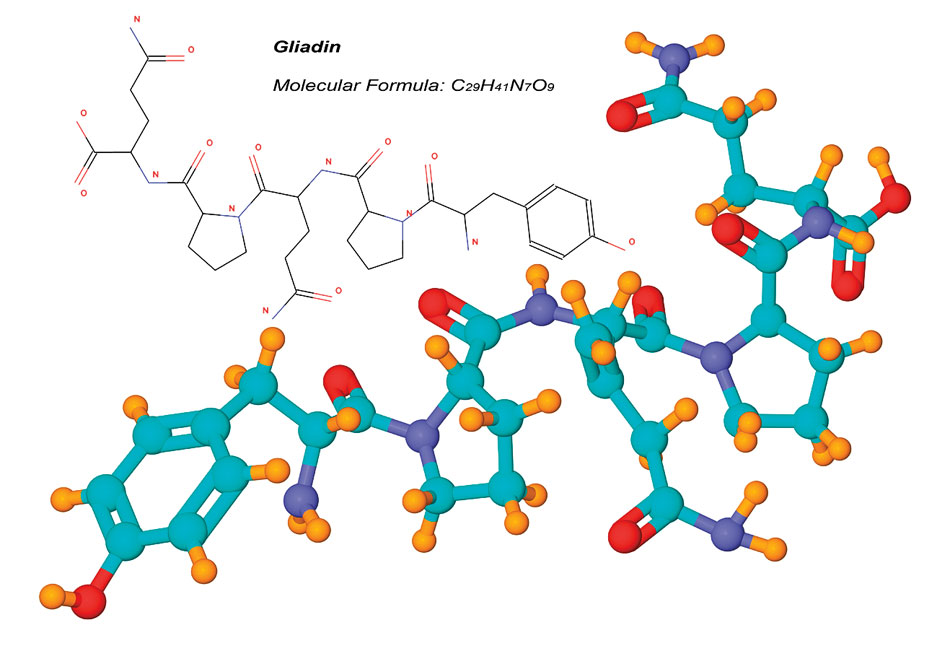
a gliadin molecule, a component of gluten. From FoodArts.com
Lately we’ve been getting a really tough question about Industry Standard. Now it might not seem so tough - at the core it’s a “yes” or “no” question - but considering all of the hype about this topic, the answer is a bit more complicated.
Q: “Hey, is your vodka gluten-free?”
Seems simple enough, right? We make beet sugar vodka, so from start to finish, there isn’t a single molecule of gluten in our process. The thing is, if we were to say “yes!” we would probably be helping add to the controversy around this misunderstood protein. Why?
The truth is that all distilled spirits, regardless of their source product, should be gluten-free.
No, really! No matter if it’s distilled from gluten-laden wheat, or gluten-free sorghum, the resulting distilled spirit should be gluten-free. Gluten, unlike alcohol or water, is a complex organic protein. As such, it simply isn’t volatile (will never vaporize through boiling) and therefore it would be physically impossible for gluten to make its way out of a still through evaporation.
You could think of gluten as salt in a pot of boiling water. No matter how much water you boil off, you will never evaporate the salt. Eventually only salt will be left in the pot since you distilled (evaporated) all of the water.
What about the people with gluten sensitivities that do react to distilled spirits? Well, barring the very real possibility of mistaking gluten sensitivity with an alcohol intolerance, the key with this whole thing is “should”. What this means is that the spirits produced through properly controlled distillation are guaranteed to contain zero gluten, but after that the chances increase.
Between that raw spirit and the bottle is where you have the improbable but remotely possible introduction of gluten-bearing materials. Flour dust from the distillery’s grain mill or “finishing” materials like caramel coloring are possible but unproven vectors for gluten introduction. Another possibility is the introduction of gluten in liqueurs or flavored spirits where ingredients have been soaked in spirits prior to bottling. Craft spirits aren’t immune to the possibility of contamination and their tendency to be made in smaller quantities can also make them inconsistent.
Simple question, complex answer. If you are sensitive to gluten be aware that distilled alcohol is safe, but that you should exercise caution with some spirits (be especially aware of labels with “natural flavors added” or gins that have been made through infusion rather than distillation). So the next time you’re in your liquor store eyeing that bottle of single malt or want to try out a new rye vodka, be cautious, read your labels and remember that distillation and being gluten-free get along just fine.
More and more research is being done on this topic, and if you want to dig a bit deeper, here are some sources to check out.
- celiac.com’s position on gluten in spirits
- The Alcohol and Tobacco Tax and Trade Bureau (TTB) position on advertising products as “gluten free”
- Scientific American about “gluten free” labeling in vodka and the possibility of “green” and “organic” type marketing abuse
- research on gluten sensitivity induced by alcohol consumption
